Fire Hydrant System Components: A Guide to Each Part and How They Work Together
The main fire hydrant system components are the pump set, the ring main (the buried or exposed pipe network), landing valves, fire hoses, hose boxes, branch pipes with nozzles, first-aid hose reels, the fire brigade inlet and the isolation and non-return valves that control the water. Each part has a clear job, and the system only works when all of them are sized and placed to suit the building. This guide explains every component in plain terms and shows how water travels from the tank to the fire.
How a fire hydrant system works
A hydrant system is a fixed, pressurised water network that lets trained people fight a fire with a large flow of water long before the fire brigade arrives. Water is stored in a dedicated fire tank, usually underground or on the terrace. A pump set draws from the tank and keeps the ring main full and under pressure. Landing valves are placed along the ring main at set points inside and around the building. When a fire starts, a person opens the hose box, connects the fire hose to the landing valve, fits the branch pipe and opens the valve.
When water is drawn, the pressure in the line drops and the pumps start automatically. The fire brigade can also connect its own tender to the system through the fire brigade inlet and pump water into the ring main. The layout, pipe sizes, tank capacity and pump duty are set by the system designer to suit the building, and local fire rules and your fire NOC set the minimum requirements, so check with your fire officer or consultant before you buy.
Fire hydrant system components at a glance
The table below lists the usual fire hydrant system components, what each one does and where it sits. Exact sizes and quantities come from the final design drawing for your site.
| Component | What it does | Where it sits |
|---|---|---|
| Fire water tank | Stores water kept only for fire fighting | Underground sump or terrace |
| Pump set (main, diesel standby, jockey) | Keeps the network pressurised and supplies flow during a fire | Pump room next to the tank |
| Ring main | Carries water around the building in a closed loop | Buried, on walls or in shafts |
| Landing valve | Outlet point where the hose is connected | Staircase landings, yard hydrant posts |
| Fire hose with couplings | Carries water from the landing valve to the fire | Inside the hose box |
| Hose box or cabinet | Protects the hose and branch pipe from dust and damage | Next to each landing valve |
| Branch pipe and nozzle | Shapes the water into a jet or spray | Inside the hose box |
| First-aid hose reel | Small-bore hose one person can use quickly | Corridors, near exits |
| Fire brigade inlet | Lets the fire tender pump water into the system | Outside wall, reachable by road |
| Isolation, non-return and air release valves | Control, direct and protect the flow | Pump room and along the ring main |
Water source, pump set and ring main
Pump set
Most hydrant systems use three pumps. The main electric pump supplies the full flow during a fire. A diesel engine pump of the same duty works as a standby when power fails. A small jockey pump makes up minor leaks and keeps the line pressure steady, so the main pump does not start for every small drop. The pumps start on pressure switches and are normally stopped by hand once the fire is out. Suction and delivery pipework in the pump room uses flanges, reducers, bellows, foot valves and safety relief valves; you can see the usual parts under pumps and pump room accessories.
Ring main
The ring main is a looped pipe network, so water can reach any hydrant from two directions. If one section is shut for repair, the rest of the ring keeps working. Pipes are usually heavy class MS or GI, painted red when exposed, and wrapped or coated when buried. Pipe size depends on flow and distance; the designer works this out. Our MS and GI pipes category lists the series and sizes most hydrant projects use.
Landing valves, hoses and hose boxes
Landing valve
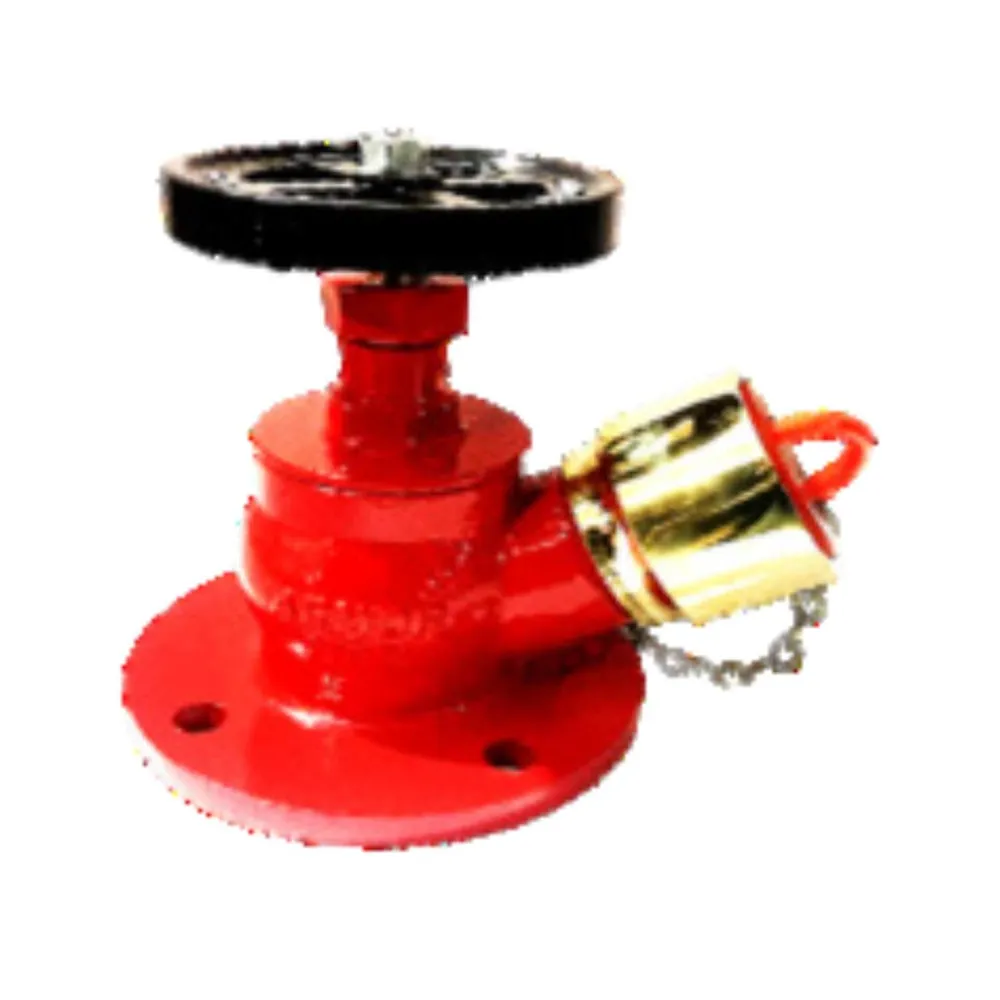
The landing valve, also called the hydrant valve, is the outlet where the fire hose is connected. It is a 63 mm instantaneous outlet in most Indian systems, available as single headed or double headed, in gunmetal or stainless steel. A blank cap with a chain keeps dirt out when not in use. Inside a building, landing valves sit on staircase landings or in fire shafts; outside, they are mounted on yard hydrant stand posts. See the range of hydrant landing valves.
Fire hose
The hose carries water from the landing valve to the fire. RRL (reinforced rubber lined) hoses are the common choice; they come in 63 mm diameter and lengths such as 15 m, with male and female instantaneous couplings at the ends. Hoses are stored dry, folded or rolled, so they can be laid out quickly. Compare types in the fire hose range.
Hose box
The hose box keeps the hose and branch pipe clean, dry and in one place. Single door boxes hold one or two hoses and a branch pipe; double door boxes are used where a hose reel or extra hoses share the same spot. Boxes are usually MS sheet, painted red, with a glass or louvred door. They should open easily and never be locked in a way that delays use.
Branch pipe, hose reel and fire brigade inlet
Branch pipe and nozzle
The branch pipe fits at the end of the hose and has a nozzle that turns the flow into a solid jet. A short branch pipe is the common type for hydrant hoses. Triple purpose nozzles let the user switch between jet, spray and shut-off, which helps control water damage and protects the user from heat. Couplings join hoses and fittings; spare couplings and adapters are worth keeping in stock.
First-aid hose reel
A hose reel is a smaller, semi-rigid hose (typically 20 mm or 25 mm bore, 30 m long) on a drum that swings out from the wall. One person can open the valve and pull the hose without unrolling anything, which makes it the first thing staff reach for on a small fire. It is fed from the same ring main through a drum fitted valve. Browse fire hose reels.
Fire brigade inlet
The fire brigade inlet, or breeching inlet, is a 2, 3 or 4 way connection on the outside of the building. The fire tender connects its hoses here and pumps water into the ring main or into the fire tank. Each inlet has a non-return valve so system water does not flow back out. It must be placed where a fire tender can reach it easily, and marked clearly. See fire brigade inlets.
Valves that control and protect the system
Several valves keep the system under control:
- Isolation valves (butterfly or sluice valves) split the ring main into sections so one part can be repaired while the rest stays live. They should be kept locked open and labelled.
- Non-return valves on each pump delivery stop water flowing back through an idle pump.
- Air release valves at high points let trapped air out, which prevents water hammer and false pressure readings.
- Foot valves and strainers on suction lines keep the pump primed and stop debris entering.
- Pressure gauges and pressure switches show line pressure and start the pumps.
The valves category covers the common butterfly, sluice, check and air valves used on hydrant lines.
Indicative prices for key components
Hydrant system cost depends far more on the pipe length, pump duty and number of hydrant points than on any one item. As a guide to individual parts:
- Single headed landing valve by Bhavi: from ₹1,833.00
- RRL fire hose 63 mm by Armorfire: from ₹1,450.00
- Fire hose box by Armorfire: from ₹1,650.00
- Swinging hose reel drum by AAAG: from ₹6,048.00
- Fire brigade inlet by Essel: from ₹3,175.00
These prices are a guide before GST. The final price, including quantity and delivery to your site, comes with the quote.
Planning a hydrant system for your site
If you are building new, the components above are chosen together with the pump room, tank and pipe routing, so it helps to work with one team from drawing to handover. Our fire hydrant system installation page explains how we handle supply and installation. If you already have a system and need replacement parts, browse fire hydrant fittings and send us your list on WhatsApp or by email; we will reply with a quote and a GST invoice, with delivery across India.