Types of Fire Extinguishers: Fire Classes, Uses and Sizes Explained
There are several types of fire extinguishers, and each one is made for certain kinds of fire. The common types are ABC dry powder, BC dry powder, CO2, clean agent, water, mechanical foam, wet chemical (K type) and D type for metal fires. The right choice depends on what can burn in that area, so it helps to start with the fire classes.
Fire classes in brief
Fires are grouped into classes by the fuel that is burning. The class tells you which extinguishing agent will work and, just as important, which agent could make the fire worse. Most extinguisher labels show the classes they are meant for, often with pictograms.
| Class | Fuel | Typical examples | Agents commonly used |
|---|---|---|---|
| A | Ordinary solids | Paper, wood, cloth, cartons, plastics | Water, foam, ABC powder, water mist |
| B | Flammable liquids | Petrol, diesel, paints, solvents, oils | Foam, ABC or BC powder, CO2, clean agent |
| C | Flammable gases | LPG, PNG, acetylene | ABC or BC powder, after the gas supply is shut |
| D | Combustible metals | Magnesium, aluminium swarf, sodium | Special D type powder only |
| K | Cooking oils and fats | Deep fryers, commercial kitchen ranges | Wet chemical (K type) |
Electrical fires are not treated as a separate class here. Where live electrical equipment is involved, the first step is to isolate power if it is safe to do so, and the agent should be non-conductive, such as CO2 or clean agent. The maker’s label says whether a model may be used on live equipment and up to what voltage.
The main types of fire extinguishers
ABC dry powder
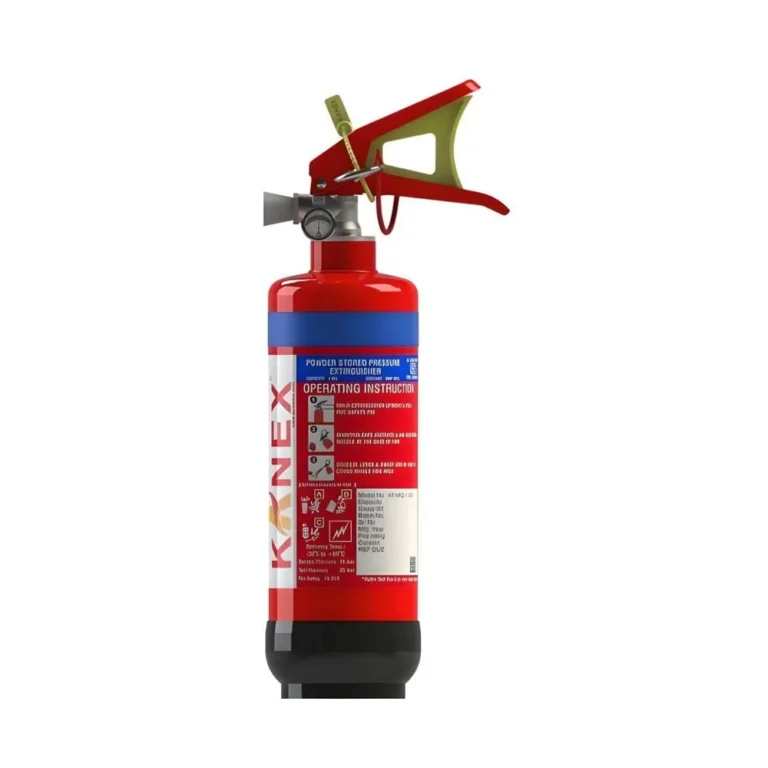
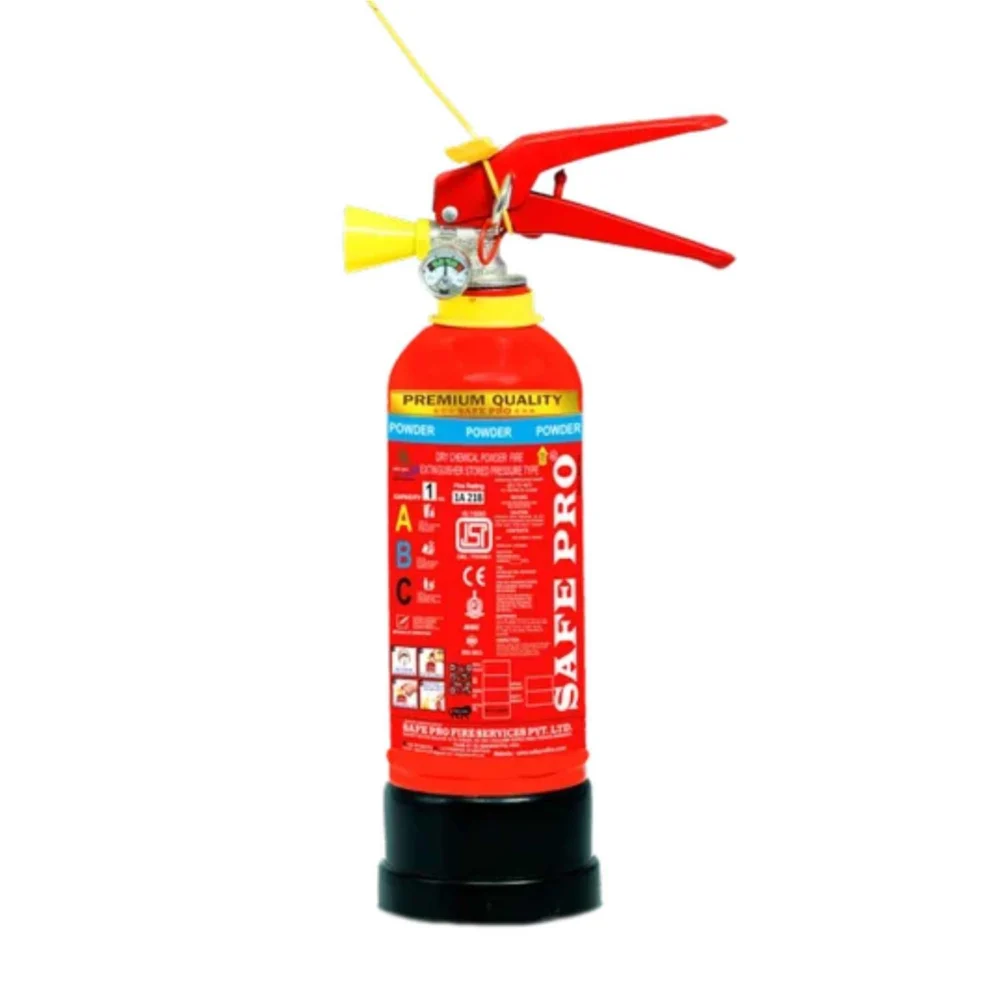
The most widely used type. The powder interrupts the burning reaction and covers class A, B and C fires, which makes it a good general choice for offices, shops, warehouses and factories. It leaves a fine residue that needs cleaning, and it can harm sensitive electronics. You can compare models in the ABC fire extinguisher range.
BC dry powder
BC powder (often sodium bicarbonate or potassium bicarbonate based) works on flammable liquid and gas fires but does little on solids. It is used at fuel stations, gas banks and some process plants. See the BC fire extinguishers.
CO2
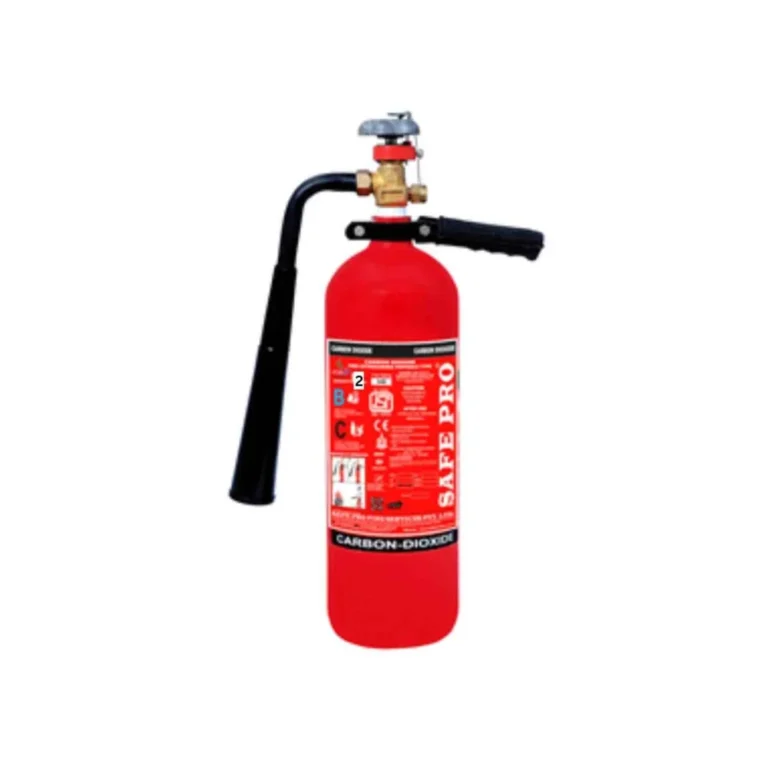
Carbon dioxide smothers the fire and leaves no residue, so it suits electrical panels, server rooms and labs, and class B liquid fires. It does not cool much, so it is not a good choice for deep-seated class A fires. Browse the CO2 fire extinguishers.
Clean agent
Clean agent extinguishers discharge a gas that evaporates without residue. They are used where equipment and records are valuable, such as data centres, control rooms and museums. They usually cost more per kilogram than powder. See the clean agent extinguishers.
Water and water mist
Water cools burning solids and is a simple choice for class A risks such as paper stores, schools and hostels. Ordinary water must never be used on electrical, oil or metal fires. Water mist units break the water into very fine droplets, which some makers rate for a wider set of risks; check the label. See the water type extinguishers.
Mechanical foam
Foam (AFFF type) forms a film over burning liquids and also works on class A solids. It is common near fuel storage, workshops, garages and chemical stores. See the foam based extinguishers.
Wet chemical (K type)
Made for cooking oil fires. The agent cools the oil and forms a soapy layer that stops it from flaring up again. Commercial kitchens, canteens and hotels use these near fryers. See the kitchen fire extinguishers.
D type
Metal fires react badly with water and many common agents. A D type unit uses a special powder that is applied gently to blanket the burning metal, for example the Kanex D type fire extinguisher. Machine shops working with magnesium or aluminium dust are the usual users.
Automatic modular units
Modular extinguishers are mounted on the ceiling or inside a panel and discharge on their own when the heat bulb bursts. They protect unattended spaces such as electrical rooms, DG sets and small stores. See the modular fire extinguishers.
Which type suits which risk
Most sites need more than one type. A short walk-through of each floor, noting what can burn in each area, is the easiest way to plan. The table below gives a common starting point; your fire officer or consultant will confirm the final mix.
| Area | Main risk | Common choice |
|---|---|---|
| Office floor, corridor, reception | A, some electrical | ABC powder, with CO2 near panels |
| Server room, UPS room, control room | Electrical, sensitive equipment | CO2 or clean agent |
| Warehouse, carton store | A | ABC powder or water |
| Fuel, paint or solvent store | B | Foam or ABC powder |
| Gas bank, LPG manifold | C | ABC or BC powder |
| Commercial kitchen | K, plus A | Wet chemical near fryers, ABC elsewhere |
| Metal machining with fine swarf | D | D type powder |
| Electrical room, DG set enclosure | Electrical, B | Automatic modular unit plus CO2 |
Common sizes and when to use a trolley unit
Portable extinguishers are sold by the weight of agent (kg) for powder, CO2 and clean agent, and by volume (litres) for water and foam. Smaller units are lighter and easier for anyone to use; larger units give longer discharge time and reach.
- 1 to 2 kg: vehicles, small shops, homes and cabins.
- 4 to 6 kg or 6 to 9 litres: the usual size for offices, shops, corridors and factory floors.
- 9 kg: larger open areas, workshops and stores where a longer discharge helps.
- CO2 2 to 4.5 kg: electrical panels and server rooms. CO2 cylinders are heavier than powder units with the same agent weight.
- Trolley units (25 kg and above, or 50 litres and above): fuel yards, tank farms, large warehouses and loading areas where a bigger fire is possible.
Wheeled units are kept in the trolley type extinguishers range. They need a clear, level path to roll to the fire, so plan where they will stand.
Placement and number of units
The number and spacing of extinguishers depend on floor area, the risk class and the local rules for your type of building. As a general practice, units are kept near exits and along escape routes, close to the specific risk they cover, and at a height where they are easy to lift off the bracket. Each unit should be visible, not blocked by stock, and marked with a sign. A range of fire extinguishers at one point on the floor is less useful than units spread so that one is always a short walk away.
Local fire rules and your fire NOC set the minimum requirements, so check the count and placement with your fire officer or consultant. If you are not sure where the gaps are, a fire safety audit will list them floor by floor.
Choosing the right type for your site
Start with what can burn in each area, match it to the classes on the label, then pick a size that the people on that floor can handle. Staff should also know which unit to use and how to use it, which is covered in fire safety training. When you have a list of areas and risks, you can send it to Drown Fire on WhatsApp or by email, and the team will reply with suitable options and a quote.