Types of Fire Sprinklers: Pendent, Upright, Sidewall, Concealed and More
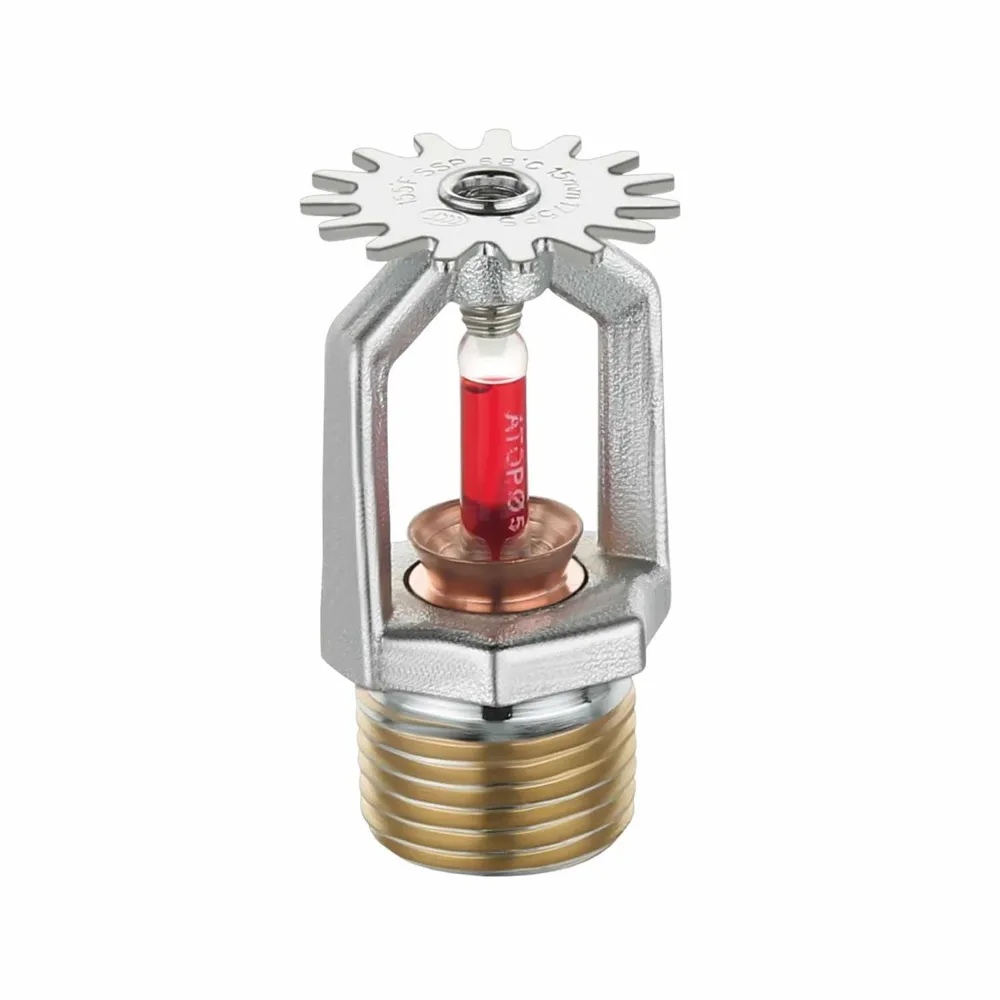
The main types of fire sprinklers are grouped by how they are mounted (pendent, upright, sidewall and concealed), by the temperature at which they open (shown by the colour of the glass bulb) and by how fast they respond (standard or quick response). Choosing the right type depends on the ceiling, the room use and the hazard. This guide explains each type in simple terms so you can read a sprinkler specification with confidence.
How a fire sprinkler works
A sprinkler is a small valve fitted to a water-filled pipe. In the most common design, a glass bulb filled with a heat-sensitive liquid holds a cap over the outlet. When hot gases from a fire heat the bulb to its rated temperature, the liquid expands and breaks the glass. Water then flows out and hits the deflector, which spreads it in a set pattern over the area below.
Only the sprinklers near the fire open; the rest stay closed. This is why sprinkler systems use far less water than many people expect, and why water damage is often limited to the area of the fire. When the first sprinkler opens, water flows through the alarm valve, which rings an alarm gong and signals the fire alarm panel.
Types of fire sprinklers by mounting
Pendent sprinkler
A pendent sprinkler hangs down from the pipe, usually through a false ceiling, and its deflector sprays water downwards in a round pattern. It is the most common type in offices, shops, hotels and hospitals where pipes are hidden above the ceiling.
Upright sprinkler
An upright sprinkler points up from the pipe, and its deflector throws water up and outwards before it falls. It is used where the pipes are exposed, such as warehouses, factories, car parks and plant rooms, because pointing up keeps it clear of knocks and lets water spread around beams and services.
Sidewall sprinkler
A sidewall sprinkler is fitted on a wall near the ceiling and throws water forward in a half pattern across the room. It suits corridors, hotel rooms and small rooms where running pipes across the ceiling is difficult.
Concealed sprinkler
A concealed sprinkler sits recessed in the ceiling behind a flat cover plate. When heat reaches the plate, the plate drops away and the sprinkler head drops down and works like a pendent. It is chosen for lobbies, showrooms and premium interiors where a clean ceiling matters. The cover plate has its own release temperature, as the maker specifies.
You can compare these mounting types in our fire sprinklers range, for example the Armorfire glass bulb sprinkler (pendent, upright and sidewall) and the Tyco concealed sprinkler with cover plate.
Sprinkler bulb colours and temperature ratings
The colour of the liquid in the glass bulb shows the temperature at which it is designed to break. The figures below are the colours as generally known; always confirm the rating marked on the sprinkler or in the maker’s data.
| Bulb colour | Typical rating | Where it is generally used |
|---|---|---|
| Orange | 57°C | Cool areas with steady temperatures |
| Red | 68°C | Most offices, shops, homes and general areas |
| Yellow | 79°C | Slightly warm areas, such as under skylights |
| Green | 93°C | Warm areas, such as near some machines or roof voids |
| Blue | 141°C | Hot areas such as boiler rooms or near ovens |
| Mauve | 182°C | Very hot process areas |
| Black | 204°C to 260°C | Special high-temperature locations |
The usual rule is to pick a rating clearly above the highest normal temperature at the ceiling, so the sprinkler does not open by accident on a hot day, but not so high that it reacts late to a real fire. 68°C red bulbs are by far the most common in ordinary buildings.
Standard response vs quick response
Sprinklers also differ in how fast the bulb heats up. This is set mainly by the bulb thickness and design.
- Standard response sprinklers typically use a thicker bulb, around 5 mm. They are common in storage and industrial areas where the system is designed to control a fire over a larger area.
- Quick response sprinklers typically use a thinner bulb, around 3 mm, which heats faster and opens sooner. They are widely used in offices, hotels, hospitals and residential areas where early action helps people escape.
Mixing standard and quick response heads in the same area is generally avoided, because the sprinklers would open at different times and upset the design. On our catalogue, the Tyco TY-FRB is a quick response sprinkler, while the Tyco TY-B is a standard response sprinkler.
Two other terms you may see are the K-factor, which describes how much water a sprinkler discharges at a given pressure (K80 is common for 1/2 inch heads), and the thread size, typically 1/2 inch or 3/4 inch. The designer chooses these based on the hazard and the water supply.
Sprinkler fittings, drops and the alarm valve
A sprinkler head is only one part of a system. Water comes from a tank and pump set, travels through main and branch pipes, and reaches each head through fittings or flexible drops. Common parts include:
- Alarm valve station: the control point of a wet system. It holds water in the pipes, rings the water motor gong when a head opens and includes a drain and pressure gauges. See the Safex sprinkler alarm valve.
- Flexible sprinkler drops: braided or unbraided hoses that connect the branch pipe to the head in a false ceiling, making it easier to line heads up with ceiling tiles.
- Flow switch and isolation valve: report water flow to the fire alarm panel and allow one zone to be shut for work.
- Sprinkler guards: wire cages that protect heads in low-ceiling or busy areas from knocks.
- Spare head cabinet: a stock of spare heads of each type and rating, with a sprinkler spanner, so opened heads can be replaced quickly.
See the full range of sprinkler fittings.
Indicative prices
As a guide to common items:
- 68°C glass bulb sprinkler by Armorfire: from ₹132.00
- 68°C fire sprinkler by Safex: from ₹178.00
- Flexible sprinkler drop by Safex: from ₹567.00
- Sprinkler alarm valve by Safex: from ₹37,170.00
These prices are a guide before GST. The final price, based on head type, quantity and delivery, comes with the quote.
Getting the sprinkler system right
Head type, spacing, temperature rating and pipe sizes all come from the system design, which depends on the building use and storage height. Local fire rules and your fire NOC set the minimum requirements, so check with your fire officer or consultant. If you need help from design to handover, see our fire fighting system installation service. For heads, drops and alarm valves, send your list on WhatsApp or by email and we will share a quote with a GST invoice and delivery across India.